
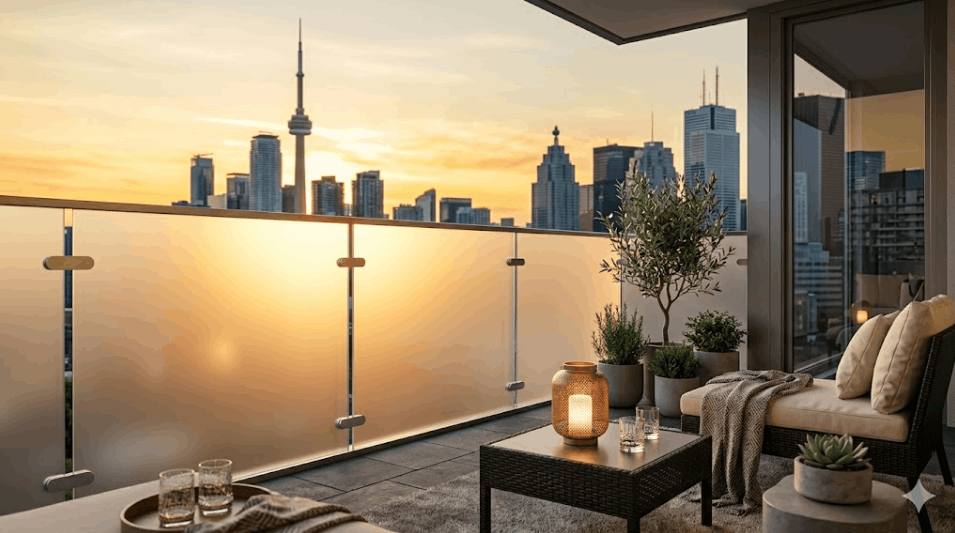
Balcony Privacy Glass in Toronto: Modern Solutions for Comfortable Outdoor Living

With the rapid expansion of high-rise condominiums, apartments, and modern townhomes across Toronto and the Greater Toronto Area (GTA), urban density is at an all-time high. While balconies offer valuable outdoor sanctuaries for relaxation, fresh air, and city views, they often come with a major drawback: a lack of privacy.
In densely populated neighborhoods like downtown Toronto, Liberty Village, or North York, balconies of adjacent units are often positioned just meters apart. This close proximity can make homeowners feel exposed to neighbors and pedestrians.
Balcony privacy glass has emerged as the premier architectural solution, providing a perfect balance between personal privacy, natural daylight transmission, and high-end modern design. In this comprehensive guide, we will explore the benefits, various glass types, safety regulations, and key installation requirements for balcony privacy glass systems.
1. Why Balcony Privacy Matters in Modern Urban Housing
In a bustling city like Toronto, your balcony should feel like an extension of your indoor living space—a private zone where you can read, drink coffee, or unwind.
However, without proper screening, occupants frequently experience:
- Visual Discomfort: Direct sightlines from adjacent units or the street below.
- Underutilized Space: Homeowners often avoid using their balconies simply because they feel watched.
- Cluttered Aesthetics: Some residents resort to temporary, non-compliant DIY screens (like plastic sheets or bamboo mats) that violate condominium bylaws and compromise the building's facade.
Professional glass privacy panels resolve these issues by establishing a clean, permanent, and building-code-compliant barrier.
2. Types of Glass Used for Balcony Privacy Systems
Choosing the right type of privacy glass depends on your specific design goals, the level of opacity you require, and your budget.
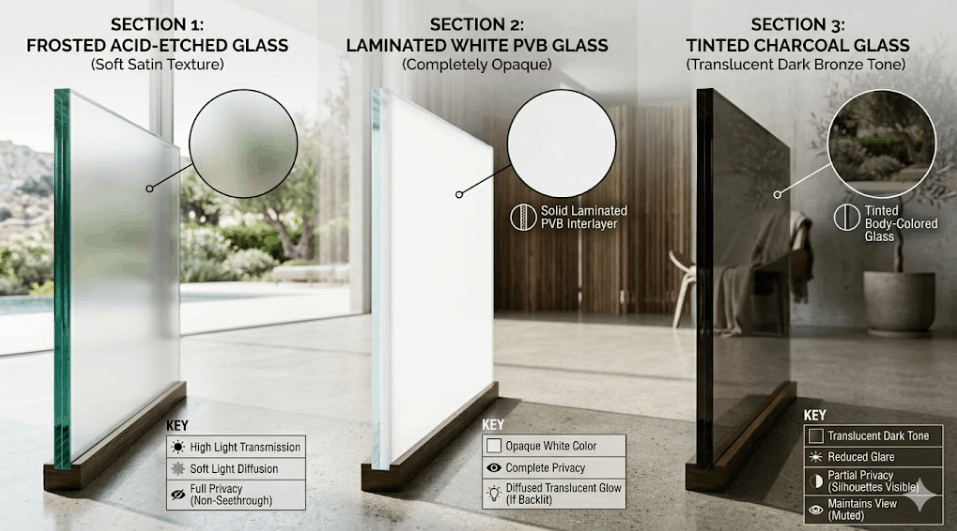
Frosted Glass (Acid-Etched or Sandblasted)
Frosted glass is the absolute gold standard for balcony privacy. It undergoes a chemical treatment (acid etching) or physical treatment (sandblasting) to create a translucent finish.
- How it works: It scatters incoming light, allowing up to 80% of natural daylight to pass through while completely obscuring the shapes and details of whatever is behind it.
- Aesthetic: It offers a soft, elegant satin finish that looks uniform and clean.
Laminated Privacy Glass
Laminated glass is made by bonding two or more glass sheets with a polymer interlayer. To achieve privacy, manufacturers use a colored, translucent, or fully opaque PVB (Polyvinyl Butyral) interlayer (such as polar white or frosted white) instead of a clear one.
- Why it’s superior: The frosted effect is sealed safely inside the glass sandwich, making it completely immune to surface scratches, weathering, or chemical stains. Utilizing White PVB in laminated configurations represents a great choice for long-term outdoor performance.
Tinted Glass
Tinted glass (often in bronze, grey, or dark charcoal shades) contains mineral additives that darken the glass.
- How it works: It reduces solar glare and heat while offering a moderate, one-way privacy effect during bright daylight hours. However, at night, when the balcony/indoor lights are on, the privacy effect is reversed.
3. Performance & Specification Comparison
Review the comparative specifications of the three main privacy glass solutions below:
| Glazing Type | Privacy Level (Day) | Privacy Level (Night) | Light Transmission | Maintenance Level |
|---|---|---|---|---|
| Frosted Glass | Maximum (Full distortion) | Maximum (Full distortion) | High (~80% light passes through) | Moderate (surface texture can catch dirt) |
| Laminated (White PVB) | Maximum (Completely opaque/frosted) | Maximum (Completely opaque/frosted) | Moderate to High (diffused glow) | Low (smooth exterior glass surfaces) |
| Tinted Glass | Moderate (shadows visible) | Low (transparent under backlighting) | Low to Moderate (reduces solar glare) | Low (cleans like standard glass) |
4. Building Code and Safety Requirements in Ontario
Balconies are highly exposed structural systems subject to intense environmental pressures, including high-altitude wind loads and severe seasonal temperature drops. In Toronto and the GTA, any balcony privacy screen must comply with the strict regulations of the Ontario Building Code (OBC).
Use of Certified Safety Glass
Under modern building codes, monolithic (single-sheet) standard glass is strictly forbidden for balconies. Railings must utilize either:
- Fully Tempered Glass: Highly impact-resistant. If it fails, it shatters into blunt, granular chunks instead of sharp shards.
- Laminated Safety Glass: Composed of two glass plies bonded by an interlayer (typically PVB or structural SGP). Laminated glass is highly recommended for multi-story buildings because if the glass breaks, the fragments stick to the interlayer, preventing dangerous shards from falling onto the streets below. We consistently specify laminated safety glass for our premier Glass Railings and privacy setups.
Wind Load Resistance
As building heights increase, wind pressures rise exponentially. Balcony glass must be engineered to withstand severe wind loads. This typically dictates the thickness of the glass, which usually ranges from 10mm to 12mm (3/8" to 1/2") for monolithic tempered, or 6mm + 6mm for laminated setups.
Structural Anchoring
The metal hardware (posts, spigots, clamps, or base shoes) holding the privacy glass in place must be made of high-grade, corrosion-resistant metals like marine-grade 316 stainless steel or anodized aluminum. These anchors must be secured directly to the concrete balcony slab or structural framework to prevent system failure during high windstorms. This is vital when implementing architectural Glass Guardrails.
Related Railing & Screen Projects
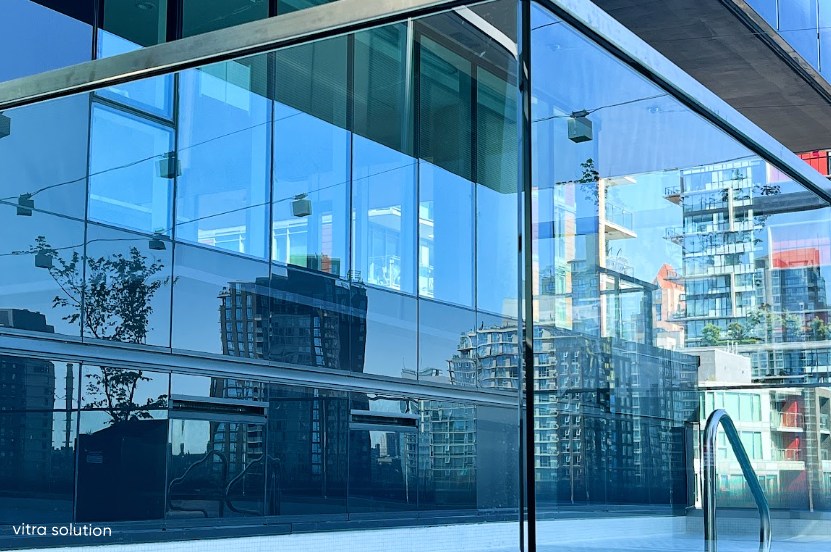
Level Amenity Railing
An 8th-floor downtown pool deck wrapped in low-iron glass using a fully concealed base shoe.
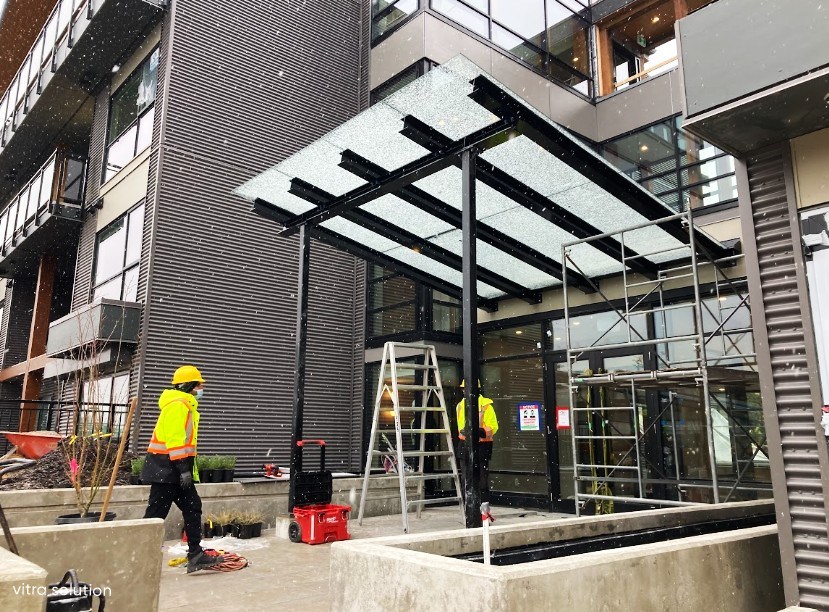
The Lloyd
Main entrance overhead glazing secured exclusively with heavy-duty standoffs for strict OBC compliance.
5. Architectural Advantages of Privacy Glass Over Opaque Barriers
Using structural glass instead of solid concrete dividers, wood partitions, or metal sheets provides several distinct architectural advantages:
- Sleek, Modern Aesthetics: Glass panels maintain the clean, minimalist lines characteristic of contemporary Toronto mid-rises and high-rises.
- Daylight Optimization: Solid partitions block sunlight, making balconies and adjacent indoor living rooms feel dark and cramped. Privacy glass acts as a light diffuser, maintaining privacy while keeping the interior bright.
- Outstanding Weather Resistance: Unlike wood (which rots and warps in Toronto's humid summers and freezing winters) or metal (which can rust over time), glass is immune to weathering, rust, and UV degradation.
- Extremely Low Maintenance: Glass panels do not require painting, sealing, or staining. A simple wash with standard soapy water a few times a year is all that is required to keep them looking pristine.