
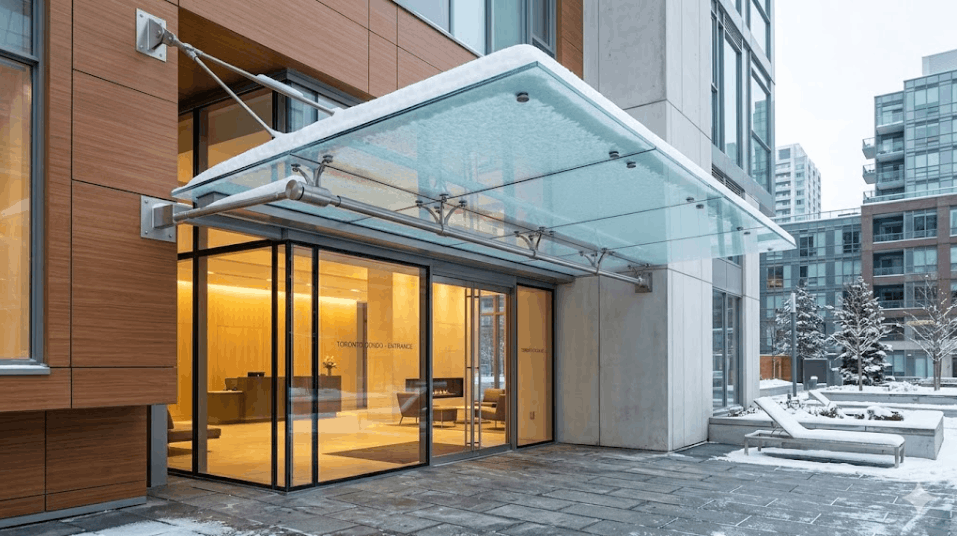
Glass Canopies in Toronto: The Ultimate Guide to Design, Benefits, and Safety Compliance

In modern architectural design, creating a seamless connection between a building's interior and exterior is highly valued. One of the most elegant and functional ways to achieve this is through a structural glass canopy.
Installed over residential entryways, commercial storefronts, and condominium lobbies, glass canopies offer a sleek, minimalist alternative to traditional opaque roofing. They provide essential protection from the elements while allowing natural light to flood the entrance area.
However, in cold-climate regions like Toronto and the Greater Toronto Area (GTA), designing and installing an overhead glass structure comes with unique engineering, safety, and aesthetic challenges. In this comprehensive guide, we will explore the benefits, material specifications, framing systems, and crucial safety codes you must consider before installing a glass canopy.
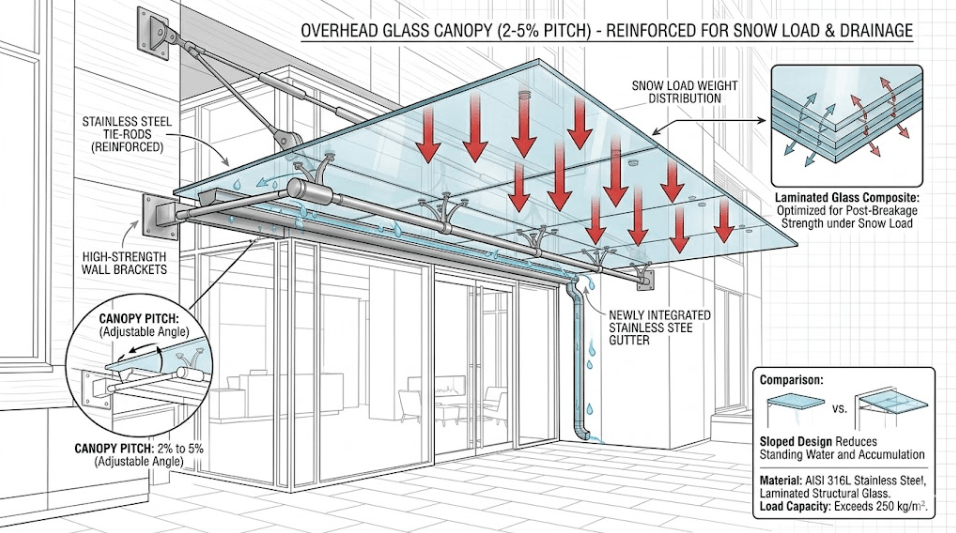
1. What Is an Architectural Glass Canopy?
A glass canopy is an overhead architectural glazing structure installed over doors, entrances, or outdoor walkways. Its primary design purpose is to provide shelter from weather conditions (such as rain, snow, and falling ice) without blocking sunlight or obstructing architectural sightlines.
A typical modern system consists of:
- High-Performance Safety Glass: Engineered to handle dead loads, wind forces, and snow accumulation.
- Structural Framing or Support Hardware: Stainless steel, heavy-duty aluminum, or tension tie-rods anchored directly to the building’s structural members.
- Waterproofing & Drainage Systems: Integrated channels or slopes designed to prevent water pooling and ice formation along the building's facade.
2. Key Benefits of Installing a Glass Canopy
Choosing a glass canopy over traditional solid concrete, metal, or wood structures offers several practical and aesthetic advantages:
Ultimate Weather Protection
In Toronto, entrances must withstand torrential rain in the spring, freeze-thaw cycles in the autumn, and heavy snow and ice buildup in the winter. A glass canopy keeps entryways dry and prevents hazardous ice accumulation on the steps or pavement below, significantly reducing slip-and-fall liabilities.
Unmatched Aesthetic Value
Glass canopies create a premium, high-end first impression. Their transparency eliminates the visual "heaviness" of solid roofs, making building entrances look larger, brighter, and more welcoming.
Maximum Light Transmission
Solid overhangs block daylight, requiring continuous artificial lighting beneath them. A glass canopy permits natural sunlight to pass through freely, reducing energy costs while keeping lobbies and storefront displays bright and vibrant.
Longevity and Low Maintenance
Unlike wood (which rots and warps) or metal (which can rust and requires frequent painting), structural glass and stainless steel components are exceptionally durable. They resist corrosion, weathering, and UV degradation, retaining their premium look for decades with only basic cleaning.
3. Glass Selection: Laminated vs. Tempered Glass
Overhead glazing carries strict safety requirements because any material failure could lead to falling debris. Therefore, choosing the correct type of glass is the most critical decision in the engineering phase.
Standard Tempered Glass (Not Recommended on Its Own)
Tempered glass is highly impact-resistant and breaks into small, relatively harmless blunt fragments instead of sharp shards. However, if a single pane of tempered glass fails overhead, the entire sheet will immediately disintegrate and fall, exposing pedestrians underneath to danger. Because of this fallout risk, building codes generally restrict the use of monolithic tempered glass for overhead applications.
Laminated Safety Glass (The Gold Standard)
Laminated glass is composed of two plies of glass permanently bonded by a polymer interlayer (typically PVB or SGP).
The Post-Breakage Advantage: If a heavy object (like falling ice from a taller building) cracks the glass, the broken fragments remain firmly adhered to the plastic interlayer. The panel stays intact within its metal frame, preventing glass fallout and keeping the entryway completely safe until a replacement is installed.
| Feature | Monolithic Tempered Glass | Laminated Glass (PVB) | Laminated Glass (SGP) |
|---|---|---|---|
| Overhead Safety | Low (shatters & falls immediately) | High (retains broken shards) | Maximum (rigid post-breakage barrier) |
| Snow Load Capacity | Moderate | High | Superior (structural ionoplast stiffness) |
| Edge Stability in Outdoors | High | Moderate (moisture can cause clouding) | Excellent (completely weather-resistant) |
| Acoustic Dampening | Low | Excellent (reduces rain/hail noise) | Good |
| Code Approval (OBC) | Rarely approved for overhead | Approved with specific framing | Highly Approved (ideal for frameless systems) |
4. Engineering & Code Compliance for Toronto Winters
Designing a glass canopy in Ontario is not just about looks; it is an engineering discipline governed by the Ontario Building Code (OBC). Any canopy installation must be stamped by a licensed Professional Engineer (P.Eng.) to ensure it can withstand the local environmental forces.
Snow Load Requirements
Toronto receives substantial snow accumulation, and wind can cause dangerous snow drifting against building walls. A canopy must be designed to carry the "dead load" of the heavy glass itself, plus the "live load" of accumulated snow. Engineers calculate the specific slope and thickness (often utilizing thick $12\text{mm} + 12\text{mm}$ laminated glass) to handle these loads safely.
Wind Uplift Forces
Tall buildings in downtown Toronto create severe "wind tunnel" effects at ground level. Canopies must be engineered to resist both downward wind pressures and upward lifting forces (uplift) that could pull the canopy away from its anchors.
Freeze-Thaw Durability
Water expands when it freezes. If water gets trapped in the canopy's metal joints, brackets, or unsealed glass edges during Toronto's frequent winter freeze-thaw cycles, it can cause structural damage. Proper drainage paths, pitch (typically a minimum slope of 2% to 5%), and moisture-resistant structural interlayers like SGP are critical to preventing water infiltration.
Related Canopy Installations
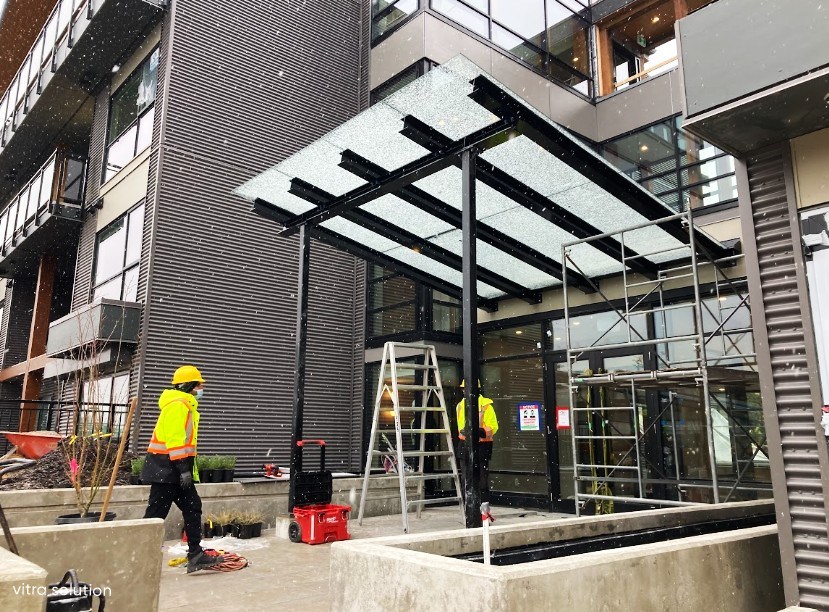
The Lloyd
Main entrance overhead glazing secured exclusively with heavy-duty standoffs for strict OBC compliance.
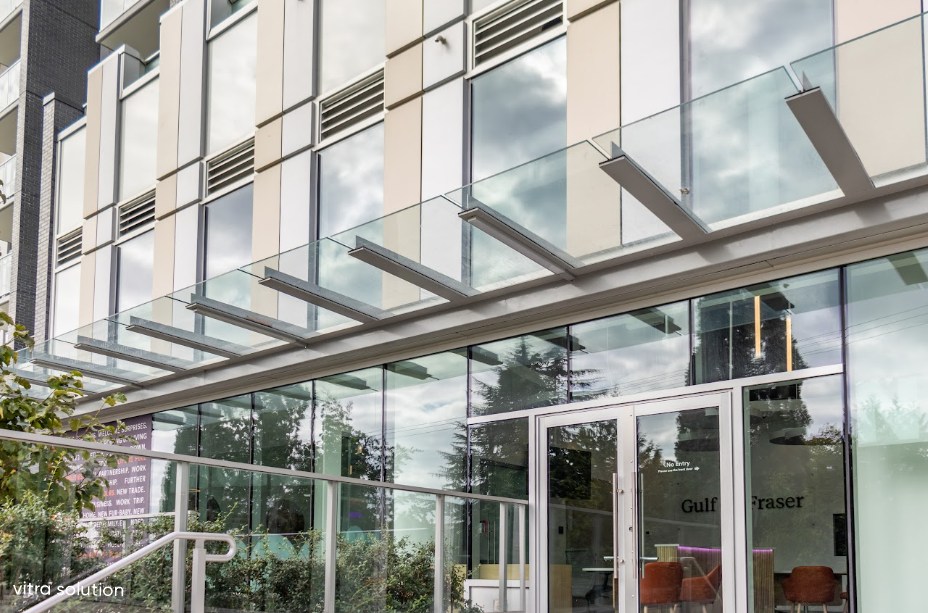
Cambie Garden CRU
Laminated glass panels integrated within a thermally broken aluminum framing system for retail storefront glazing.
5. Framing and Architectural Design Styles
To match your building’s facade, glass canopies can be engineered in several structural styles:
1. Tie-Rod Suspended Systems (Cantilevered)
This is the most popular style for modern retail storefronts and condo lobbies. The glass panel is supported by heavy-duty stainless steel brackets anchored to the wall, with tension rods running from the outer edge of the canopy up to the building wall. This eliminates the need for ground posts, keeping the walkway completely clear.
2. Post-Supported Systems
For larger entrances or areas with extremely high snow loads, a post-supported canopy is utilized. The glass is held up by a structural steel or aluminum frame that transfers the load down to vertical ground posts anchored into concrete footings.
3. Frameless Point-Supported Canopies
For an ultra-minimalist, floating appearance, point-supported systems use heavy-duty stainless steel "spider fittings" that pass through pre-drilled holes in the laminated glass. This creates a clean, continuous glass surface with no distracting metal borders.