Heat-Treated Glass: The Definitive Guide to Tempered vs. Heat-Strengthened Glass

In modern construction, standard glass is often too fragile to withstand environmental and structural demands. High winds, thermal stress from direct sunlight, and physical impacts can easily cause standard glass to crack or shatter.
To solve these vulnerabilities, the glazing industry relies on heat-treatment processes. By heating and cooling glass under controlled conditions, manufacturers can alter its internal stress patterns, creating materials with vastly superior strength and safety profiles.
However, "heat-treated glass" is not a single product. It is divided into two distinct categories: Heat-Strengthened (HS) glass and Fully Tempered (FT) glass. Understanding the differences between these two types is essential for ensuring safety, code compliance, and successful project delivery.
1. The Science of Heat Treatment
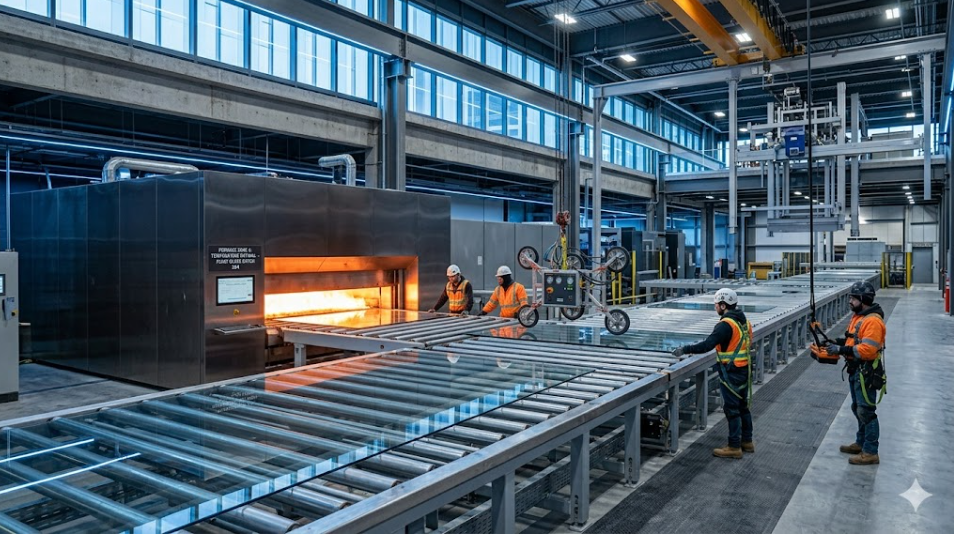
All heat-treated glass begins as standard annealed (raw) glass. The raw glass panel is placed inside a specialized tempering furnace where it is heated to temperatures of approximately 600°C to 650°C (just as the glass begins to soften).
Once heated, the glass undergoes a rapid cooling process known as quenching:
- High-pressure blasts of air are directed onto both surfaces of the glass.
- The outer surfaces of the glass cool and contract much faster than the inner core.
- As the inner core cools, it pulls on the outer surfaces, locking high compressive stresses into the glass surfaces, balanced by tensile stresses in the center.
It is this engineered surface compression that gives heat-treated glass its exceptional resistance to impact and thermal stress. This technology is critical in manufacturing premium architectural solutions like Glass Railings.
2. Heat-Strengthened vs. Fully Tempered Glass
The key difference between Heat-Strengthened and Fully Tempered glass lies in the speed of the quenching process, which dictates the level of surface compression achieved.
Heat-Strengthened (HS) Glass – Slow Quenching
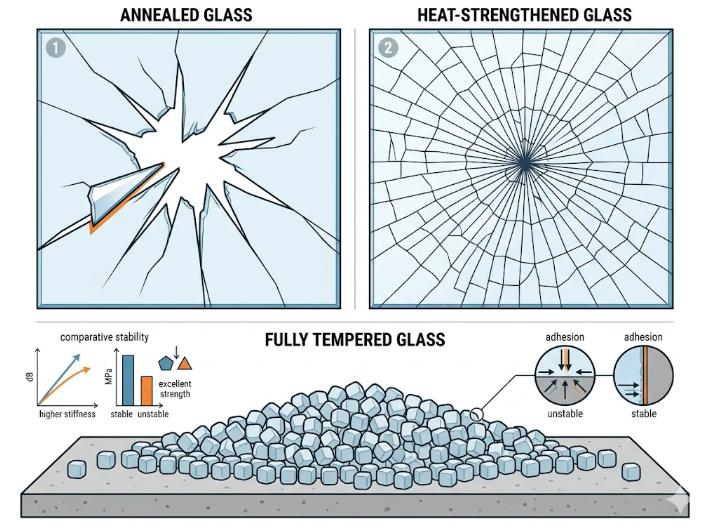
In heat-strengthened glass, the cooling process is controlled and relatively slow. This results in a moderate level of surface compression, typically ranging from 3,500 to 7,500 psi (24 to 52 MPa).
- Strength: Approximately 2x stronger than standard annealed glass.
- Break Pattern: If broken, HS glass cracks into large, spiderweb-like shards that run from edge to edge.
- Safety Class: Not classified as a safety glass. Because it breaks into large shards, it can still pose a fall-out hazard if not laminated.
- Best Used For: Curtain walls, spandrel glass, and high-wind window systems where maximum optical flat-surface quality is needed with high thermal stress resistance.
Fully Tempered (FT) Glass – Rapid Quenching
In fully tempered glass, the cooling air blast is highly aggressive and rapid. This creates an extremely high surface compression of over 10,000 psi (69 MPa).
- Strength: Approximately 4x to 5x stronger than standard annealed glass.
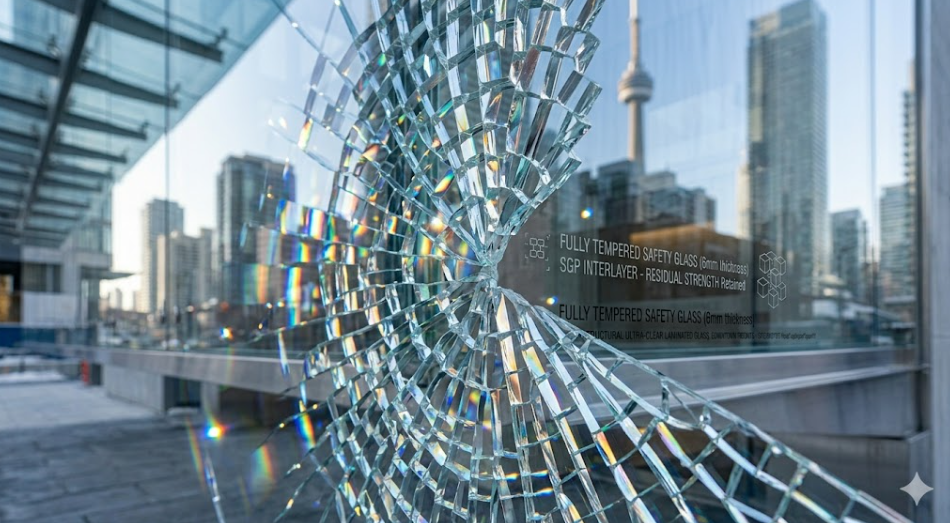
- Break Pattern: If broken, fully tempered glass immediately disintegrates into thousands of tiny, blunt, relatively harmless cubes (dicing).
- Safety Class: Certified as safety glazing. The dicing pattern minimizes the risk of severe lacerations. This form is mandatory in frameless configurations and public-facing Glass Guardrails.
- Best Used For: Hazardous locations, frameless glass railings, entrance doors, tub/shower enclosures, and structural glass systems.
3. Side-by-Side Comparison
Understanding which heat-treatment meets structural and local building code demands is crucial for engineers and developers. Review our comparison guide below:
| Engineering Property | Annealed Glass (Raw) | Heat-Strengthened Glass (HS) | Fully Tempered Glass (FT) |
|---|---|---|---|
| Cooling Rate | Very Slow (Ambient air) | Moderate | Rapid (High-pressure air blast) |
| Surface Compression | None | $3,500\text{ to }7,500\text{ psi}$ | $> 10,000\text{ psi}$ (Safety level) |
| Strength Comparison | Baseline ($1\times$) | Approximately $2\times$ stronger | Approximately $4\times\text{ to }5\times$ stronger |
| Break Pattern | Large, sharp, dangerous shards | Large pieces (runs to edges) | Small, blunt, granular cubes |
| Safety Glass Rating | No | No | Yes (ANSI Z97.1 & CAN/CGSB) |
| Thermal Stress Resistance | Low | High | Maximum |
| Spontaneous Breakage Risk | None | Extremely Low | Minimal (due to potential NiS inclusions) |
4. Key Benefits of Heat-Treated Glass
Integrating heat-treated glass into residential and commercial facades yields three massive performance advantages:
Exceptional Thermal Stress Resistance
When a glass panel is exposed to uneven sunlight (e.g., half the panel is shaded by a balcony while the other half is under direct hot sun), thermal expansion forces are created. Annealed glass can easily crack under this stress. Heat-strengthened and fully tempered glass can handle massive temperature variations, making them essential for high-performance low-E glass coatings.
Enhanced Safety and Peace of Mind
Fully tempered glass is engineered to protect occupants. If a person falls against a tempered window or shower door, the high-strength glass resists the force. In the worst-case scenario of a break, the blunt dice pattern prevents life-threatening injuries.
Structural Performance Under High Loads
For high-wind regions, structural guardrails, and commercial display screens, heat-treated glass resists bending and deflection under heavy winds or crowd pressure loads, ensuring building safety.
5. Crucial Rules for Contractors and Builders
Working with heat-treated glass requires distinct coordination practices on-site:
The "No Post-Processing" Rule
Once glass has undergone heat treatment (either HS or FT), it can never be cut, drilled, or edge-polished again. Any attempt to drill a hole or cut the glass on-site will immediately shatter a tempered panel or crack a heat-strengthened one. All dimensions, holes, notches, and cutouts must be precisely detailed on shop drawings and completed prior to heat processing at the fabrication plant.
Edge Sensitivity
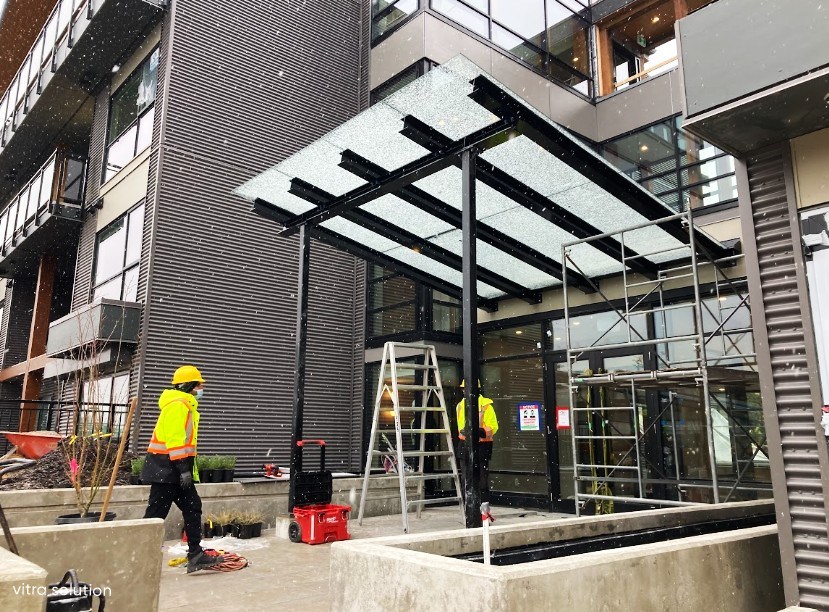
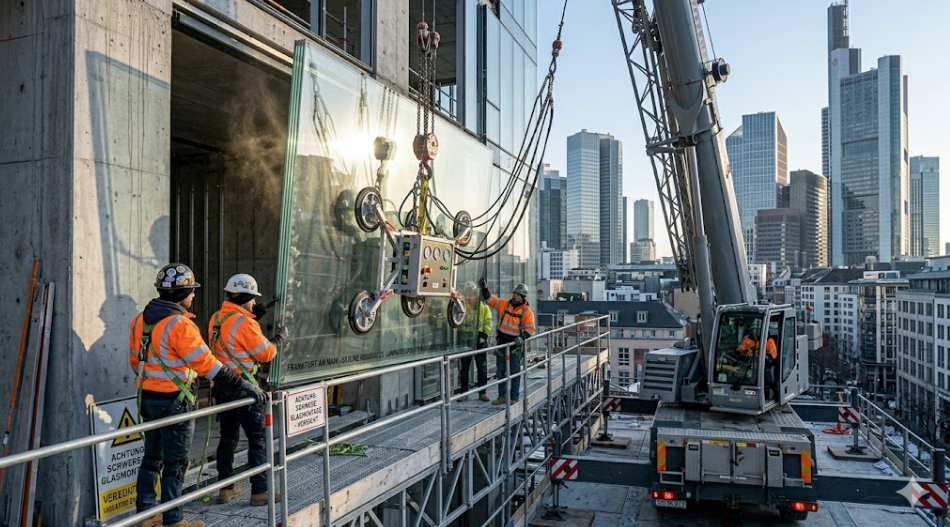
The surface of tempered glass is incredibly tough, but its edges are its Achilles' heel. The high internal stresses make the corners vulnerable. A minor metal-on-glass hit on a corner during hoisting can cause the entire panel to explode instantly. Always keep protective corner caps on until the glass is securely set in its framing. This level of detailing is always maintained during our structural installations, including premium Glass Canopies.