
Low Iron Glass vs. Standard Clear Glass: The Ultimate Guide for Modern Architecture

When it comes to modern architectural design, glass is no longer just a functional barrier—it is a key design element used to manipulate light, space, and aesthetic feel. If you are planning a high-end residential or commercial project, you will inevitably face a crucial decision: Should you use Low Iron Glass or Standard Clear Glass?
While they may look identical from a distance, these two materials behave very differently under light. Choosing the wrong one can drastically alter the appearance of your final design, leaving you with an unexpected green tint where you wanted pristine transparency.
In this comprehensive guide, we will break down the science, the visual differences, structural properties, and cost considerations to help you make the perfect decision for your project.
1. The Science: Why Does Standard Glass Look Green?
To understand the difference, we must look at the raw materials. All float glass is manufactured from a mixture of silica sand, soda ash, and limestone.
Standard Clear Glass
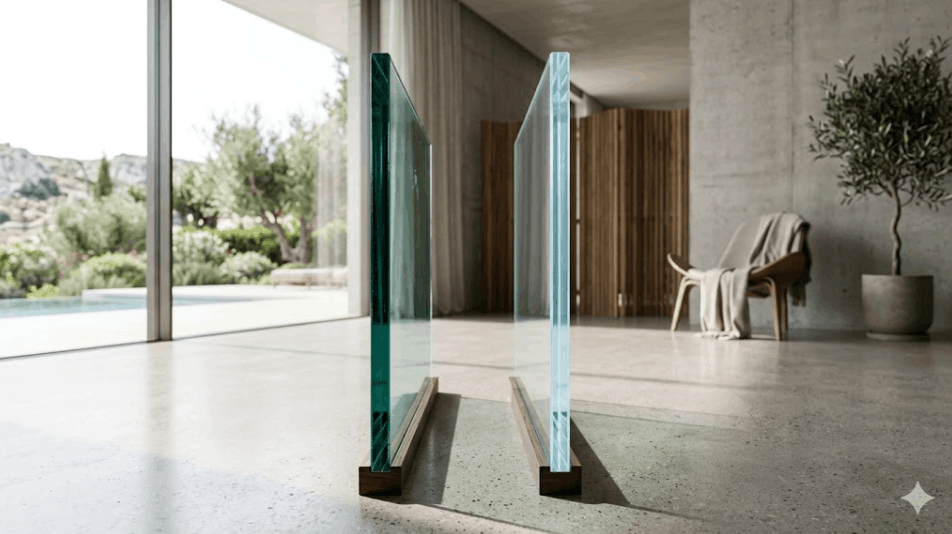
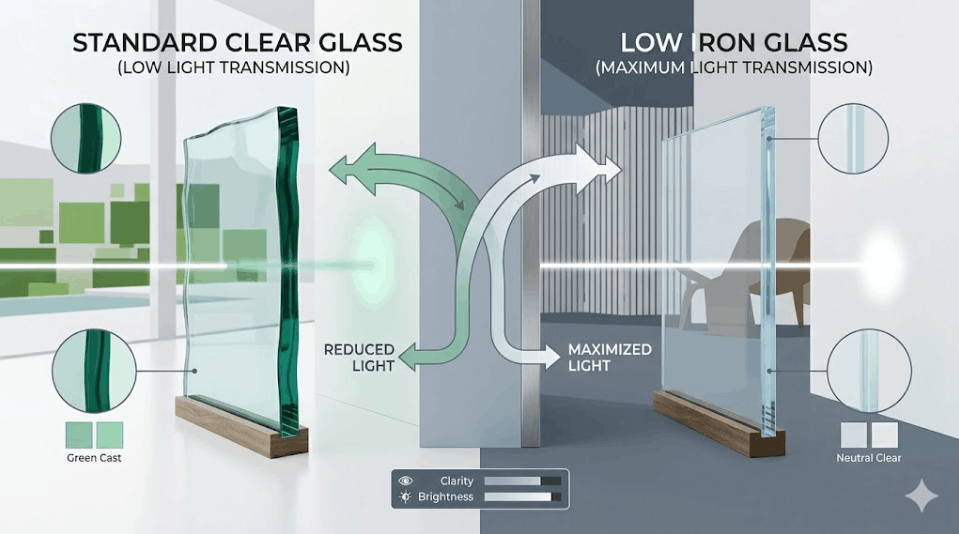
Silica sand naturally contains iron oxide impurities. During the manufacturing of standard clear glass, these iron particles remain in the molten mixture. The iron oxide content in standard glass is typically around 0.1%. While this seems tiny, iron absorbs red light wavelengths while letting green light pass through. This chemical property creates a distinct greenish-blue tint that becomes highly visible on the edges or when stacking multiple panels.
Low Iron Glass
Also known as optically clear, extra-clear, or by brand names like Diamant (by Saint-Gobain) or Optiwhite, low iron glass is made using high-purity silica sand that is naturally low in iron. Stricter manufacturing controls bring the iron oxide level down to approximately 0.01%—roughly one-tenth of standard glass. This almost entirely eliminates the green hue, delivering a neutral, crystal-clear appearance.
2. Light Transmission and Color Accuracy
The difference in iron content has a major impact on how much light passes through the glass and how accurately colors are represented.
Visible Light Transmittance (VLT)
Standard Clear Glass allows about 83% to 87% of visible light to pass through, whereas Low Iron Glass achieves an outstanding VLT of 91% to 92%. An 8% increase in light transmission might sound modest on paper, but in real-world applications, it dramatically enhances the brightness of interior spaces, particularly during overcast seasons or in north-facing rooms.
True Color Representation
Because standard clear glass has a green tint, anything you see through it inherits a subtle green cast. White walls look minty, pastel backdrops shift colors, and artwork loses its original vibrancy. Low iron glass acts as an invisible canvas, offering absolute color fidelity. This makes it indispensable for art galleries, museums, and high-end retail display cases.
3. Side-by-Side Comparison
To help you quickly weigh your options, here is a detailed comparison of their technical and aesthetic specifications:
| Feature | Low Iron Glass | Standard Clear Glass |
|---|---|---|
| Iron Oxide Content | ~0.01% | ~0.1% |
| Visible Light Transmittance (VLT) | 91% – 92% (8% brighter) | 83% – 87% |
| Edge Color | Faint, neutral icy-blue | Noticeable green (darkens with thickness) |
| Color Fidelity | Perfect color accuracy | Distorts light colors (adds a green cast) |
| Best for Back-Painting | Excellent (true-to-spec color matching) | Poor (shifts whites to green/mint) |
| Price Point | 30% to 40% premium | Economical / Baseline |
| Safety Options | Can be fully tempered & laminated | Can be fully tempered & laminated |
| Spontaneous Breakage Risk | Lower (due to purer raw materials) | Standard |
4. Best Applications: Where to Use Which?
You don’t always need to pay the premium for low iron glass. A smart design approach involves using each material where its strengths shine.
When to Choose Low Iron Glass
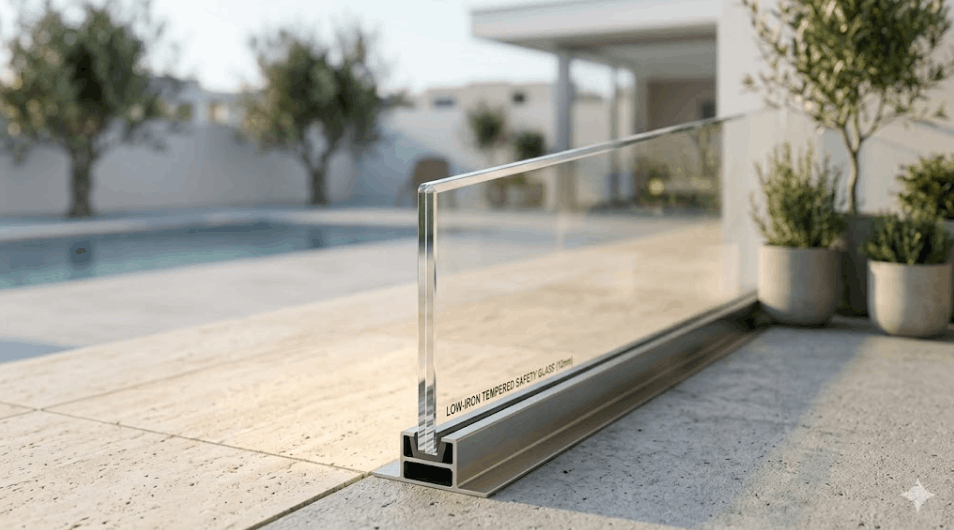
- Glass Railings & Balustrades: Heavy-duty railings typically require thick panels (10mm to 12mm) or laminated layers. Standard glass at this thickness will show a heavy, distracting dark green border. Using low iron glass in Glass Railings and Glass Guardrails keeps the edges clean, elegant, and modern.
- Back-Painted Glass Panels: If you are installing a painted glass backsplash, feature wall, or reception desk, any green tint in the substrate will ruin the color matching. Low iron glass is an absolute requirement.
- Frameless Shower Enclosures: If your bathroom features light tiles, white marble, or premium stone work, standard glass will cast a green shadow over your beautiful masonry. Low iron glass keeps your shower completely open and bright.
- Storefronts & Display Cases: To ensure merchandise or museum artifacts are seen in their true colors under natural and artificial light.
Related Premium Projects
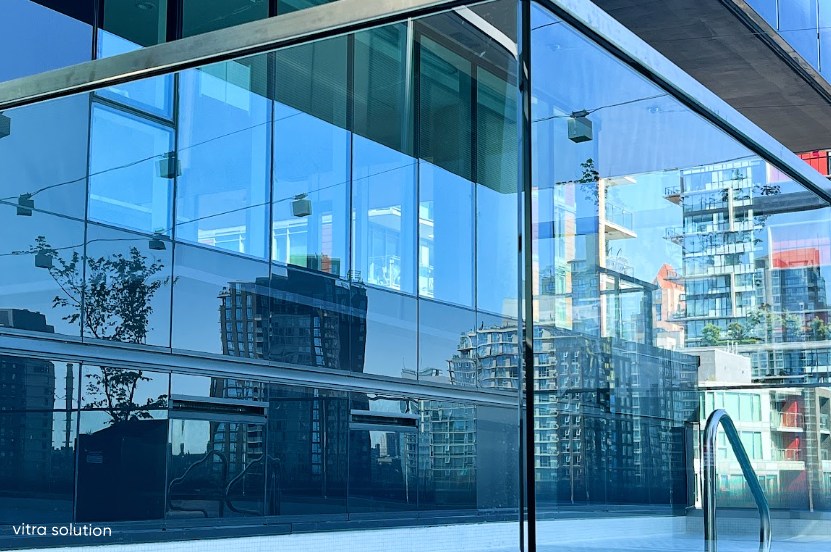
Level Amenity Railing
An 8th-floor downtown pool deck wrapped in low-iron glass using a fully concealed base shoe.
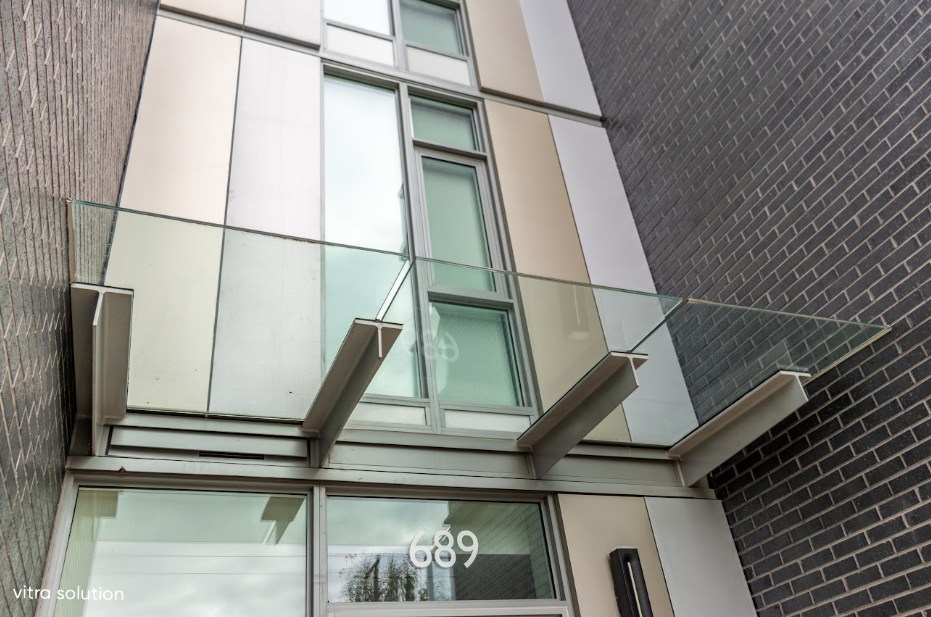
Coastal Health Entrance
Healthcare facilities benefit from maximum natural light. This entrance canopy was fabricated using ultra-clear low-iron glass.
When to Save Your Budget with Standard Clear Glass
- Thin Window Panes: For window glass under 4mm, the iron content is so thin that the green tint is practically imperceptible to the naked eye.
- Secondary & Utility Windows: Areas where pure aesthetics are secondary to insulation and protection (e.g., basement windows, garage windows, or utility doors).
- Dark-Themed Interior Designs: If your space features deep charcoal tones, black steel, or dark woods, the green tint of standard glass will naturally blend into the environment, making the premium cost of low iron glass unnecessary.
5. Structural Performance and Safety: Are They Equal?
A common myth is that low iron glass is more fragile because it is more transparent. This is completely false. From an engineering and safety perspective, both glass types perform identically:
- Tempering: Both can be fully tempered to increase impact strength by up to five times. If broken, both will shatter into safe, blunt pebbles rather than sharp shards.
- Lamination: Both can be combined with PVB or SGP (SentryGlas) interlayers to meet strict local building codes for guardrails, balconies, and canopies.
- Spontaneous Breakage: Standard tempered glass can occasionally shatter spontaneously due to tiny, microscopic impurities called Nickel Sulfide ($NiS$) inclusions. Because low iron glass is made with higher-grade, more thoroughly refined materials, the occurrence of these impurities is significantly lower, which naturally reduces the risk of spontaneous failure.
6. Managing the Budget: The Hybrid Approach
Low iron glass is a premium product that typically carries a 30% to 40% cost markup over standard clear glass. This is due to the rarity of low-iron silica sand and the higher temperature controls required during melting.
If you are working on a tight budget but still want a luxurious look, many architectural designers recommend the hybrid approach:
- Specify Low Iron Glass for highly visible focal points, such as the main staircase railing, frameless shower enclosures, and the main facade.
- Use Standard Clear Glass for side windows, frame-bound partitions, and areas with darker surrounding finishes.
This strategy ensures that your budget is allocated precisely where it makes the biggest visual impact.