
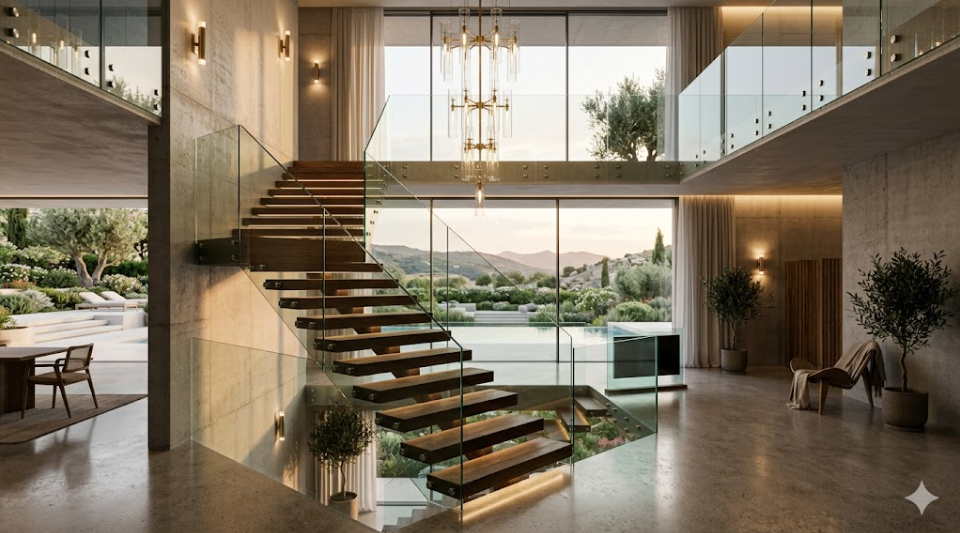
Elegant & Modern: The Complete Guide to Standoff Glass Railing Systems for Staircases

In contemporary interior design and luxury architecture, the goal is often to make structural elements feel as light, open, and invisible as possible. Traditional bulky wood or wrought-iron railings can make a home or commercial lobby feel closed off and dark.
To solve this, designers are increasingly specifying engineered frameless glass railing systems. Among the various installation methods available, standoff glass railings—also known as pin-supported or point-supported systems—are the premier choice for achieving an ultra-minimalist, high-end "floating glass" aesthetic across modern Canadian homes.
In this comprehensive guide, we will break down what a standoff glass railing system is, explore its unique advantages, explain the critical engineering requirements for a safe installation, and answer the most common questions about this modern design statement.
1. What Is a Standoff Glass Railing System?
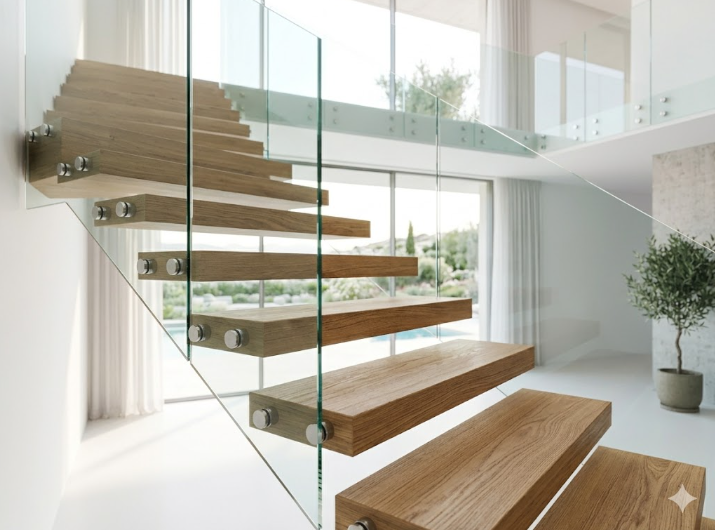
A standoff glass railing is a side-mounted (face-mounted) glass system. Instead of sitting inside a metal track or channel on top of the stairs, the glass panels are secured to the side vertical face of the staircase, balcony, or slab.
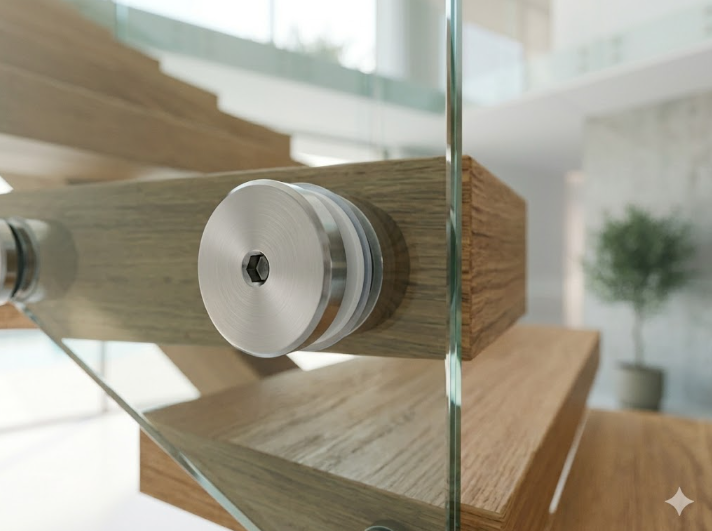
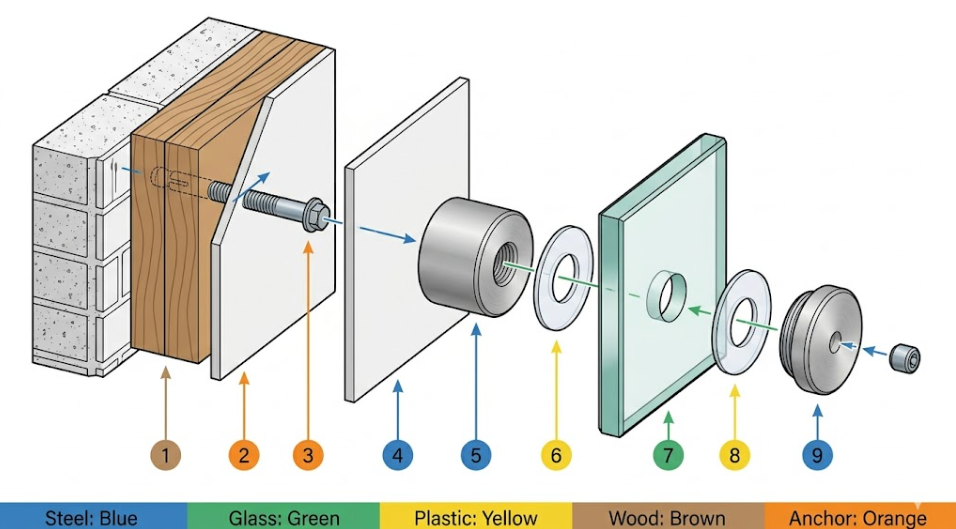
This is achieved using cylindrical stainless steel spacers called standoffs or pins. Each standoff consists of:
- The Anchor Bolt: Secures the hardware deeply into the staircase's structural substrate.
- The Body (Spacer): Determines the offset distance between the glass and the staircase face (typically 1.5 inches to 2 inches).
- Gaskets & Washers: Transparent plastic sleeves that prevent the metal hardware from touching the glass directly.
- The Cap: The finished round metal disk that screws into the body, locking the glass securely in place.
Because the fastening hardware is pushed to the outer side of the stairs, the glass panels appear to float seamlessly in the air, creating a striking architectural statement. If you are planning an upgrade in the Greater Toronto Area, explore our precision-manufactured custom glass railings in Toronto engineered specifically for modern architectural standards.
2. Key Advantages of Standoff Glass Railings
Choosing a standoff point-supported system offers several major aesthetic, spatial, and functional benefits over standard top-mounted railings:
Maximizing Staircase Width & Walkway Space
Traditional railings require a bottom shoe or posts that sit directly on top of the stair treads, reducing the usable width of your staircase by several inches. Because standoff systems mount entirely to the outside face of the stairs, you retain 100% of your staircase width. This is a massive advantage in narrower townhomes or luxury condos where every inch of space counts.
Sleek, Minimalist "Floating" Aesthetics
With no bulky bottom tracks, vertical posts, or heavy top caps, the glass itself becomes the dominant design feature. The clean, crisp lines of the glass edges remain completely uninterrupted, complementing open-riser floating staircases beautifully.
Unobstructed Views and Natural Light Flow
Staircases are often positioned in central hallways or near entryways. A solid railing blocks daylight, casting dark shadows and dividing the home. Standoff glass railings allow natural light to move freely through the floors, making the entire property feel larger, brighter, and more cohesive.
High Structural Durability
Made from marine-grade 316 stainless steel (or anodized aluminum) and heavy-duty tempered-laminated glass, these systems are highly durable. They are resistant to rust, moisture, and wear, making them equally suited for high-traffic luxury residential interiors and demanding commercial environments.
3. Structural Backing: The Non-Negotiable Requirement
Because a standoff system relies on individual point-connections to hold heavy structural glass panels, the vertical surface (substrate) it attaches to must be exceptionally strong. You cannot anchor a standoff glass railing directly into drywall, plaster, or decorative molding.
The system must be fastened into a solid structural backing. The three most common substrates include:
- Reinforced Wood Framing: For residential wood staircases, structural blocking must be integrated inside the stringer during the rough framing stage. This typically requires a solid double 2x12 or solid 2x8 wood block secured tightly behind the drywall. The standoff bolts pass through the drywall and anchor deep into this structural wood.
- Concrete Slabs: Mounting standoffs directly into concrete (such as commercial lobbies or concrete staircases) is incredibly strong. Installers use heavy-duty expansion anchors or chemical epoxy anchors drilled directly into the cured concrete slab.
- Structural Steel: In modern commercial spaces or industrial-chic residential lofts, staircases are often framed in steel. Installers drill and tap the steel stringers, allowing the standoff pins to bolt directly into the metal frame for maximum load resistance.
4. Substrate Comparison & Mounting Suitability
Understanding which building substrate works best for standoff installations is critical to ensuring architectural safety. Review our comparative table below:
| Substrate Type | Strength Level | Backing Required? | Best Installation Phase |
|---|---|---|---|
| Structural Concrete | Maximum | No (anchors directly into solid concrete) | Post-cure / Finished stage |
| Heavy-Duty Steel Frame | Maximum | No (bolts directly into structural steel) | Framing or finishing stage |
| Reinforced Wood Frame | High | Yes (double 2x12 or solid lumber blocking) | Rough framing stage (pre-drywall) |
| Standard Drywall / Studs | Unsafe | Yes (cannot support loads without blocking) | Never install without blocking |
5. Building Code and Safety Compliance (OBC)
To comply with the Ontario Building Code (OBC) and other local safety regulations, a standoff glass railing must be treated as a critical safety barrier:
- Glass Specification: Monolithic annealed glass is strictly prohibited. The system must use either heavy tempered glass (typically 12mm or 15mm thick) or tempered-laminated glass (such as 6mm + 6mm or 8mm + 8mm with a PVB or SGP interlayer). Laminated glass is highly recommended for open-side stairs to prevent falling shards if a panel breaks. We prioritize top-tier laminated safety components for our custom Glass Guardrails and architectural balconies.
- Load Requirements: The standoff pins and the glass panels must be engineered to resist point-loads and uniform loads (such as a person leaning heavily or falling against the barrier).
- Handrail Requirements: In many jurisdictions, if the glass railing is safeguarding a drop-off of more than a certain height, a continuous handrail must be attached to the glass panels or the adjacent wall to provide a secondary safety grip.
Related Railing Projects
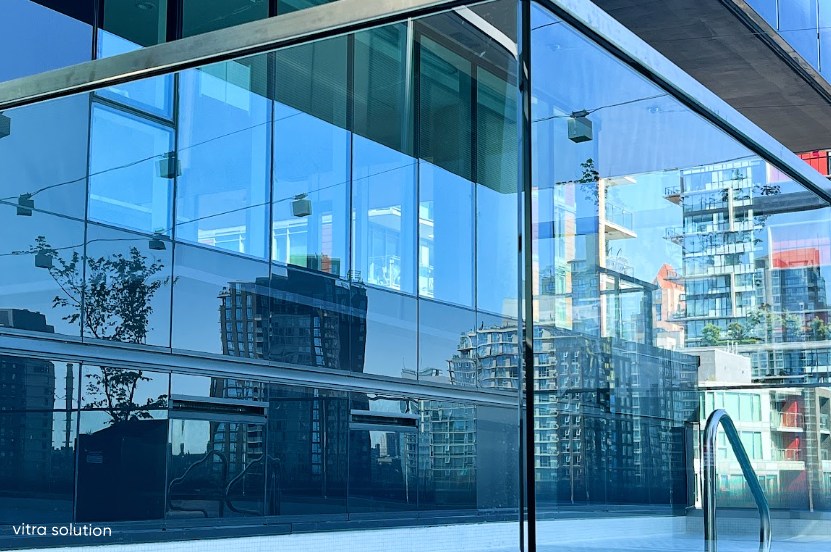
Level Amenity Railing
An 8th-floor downtown pool deck wrapped in low-iron glass using a fully concealed base shoe.
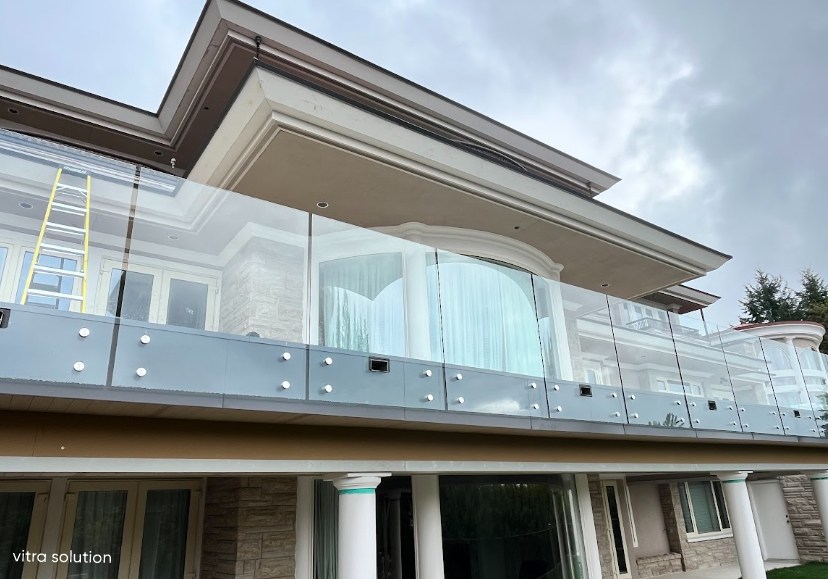
Curved Frameless Guardrail
Custom-bent tempered panels templated to trace the exact radius of a deck edge using standoff point-fixings.
6. Architectural Advantages of Point-Supported Glass Systems
Utilizing high-end architectural standoff systems instead of generic frame railings provides modern homes with notable value additions:
- Ultimate Architectural Transparency: Standoff systems deliver the lowest amount of hardware distraction compared to standard post or base-shoe railings.
- Custom Finishes: Stainless hardware can be brushed, polished, or coated in matte black and brass PVD to seamlessly match your home's color palette.
- Extreme Weather Resistance: Marine-grade 316 stainless steel avoids rusting and degradation under severe Ontario winters. If you have exterior entrances, see our matching Structural Glass Canopies.